Azure Monitor pricing: What you pay vs. what you get
Azure Monitor uses a consumption-based pricing model rather than fixed tiers, meaning costs fluctuate based on specific usage metrics like log ingestion, retention, and alerting. L…
Azure Monitor uses a consumption-based pricing model rather than fixed tiers, meaning costs fluctuate based on specific usage metrics like log ingestion, retention, and alerting. L…
This 2026 buyer's guide categorizes the Kubernetes monitoring market into three distinct segments: open-source, commercial SaaS, and converged observability. It evaluates various p…
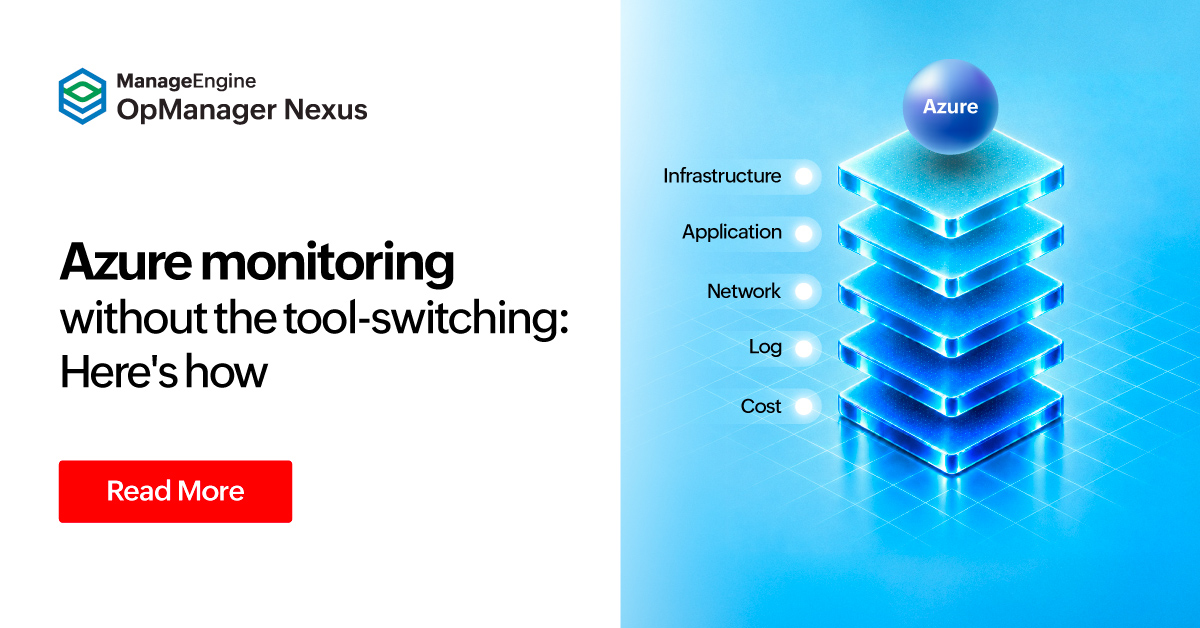
ManageEngine OpManager Nexus addresses the challenges of fragmented Azure monitoring by consolidating infrastructure, application, network, log, and cost visibility into a single, …
While Azure Monitor offers seamless integration for Azure environments, its complex, multi-component pricing model can lead to unpredictable costs as monitoring requirements scale.…
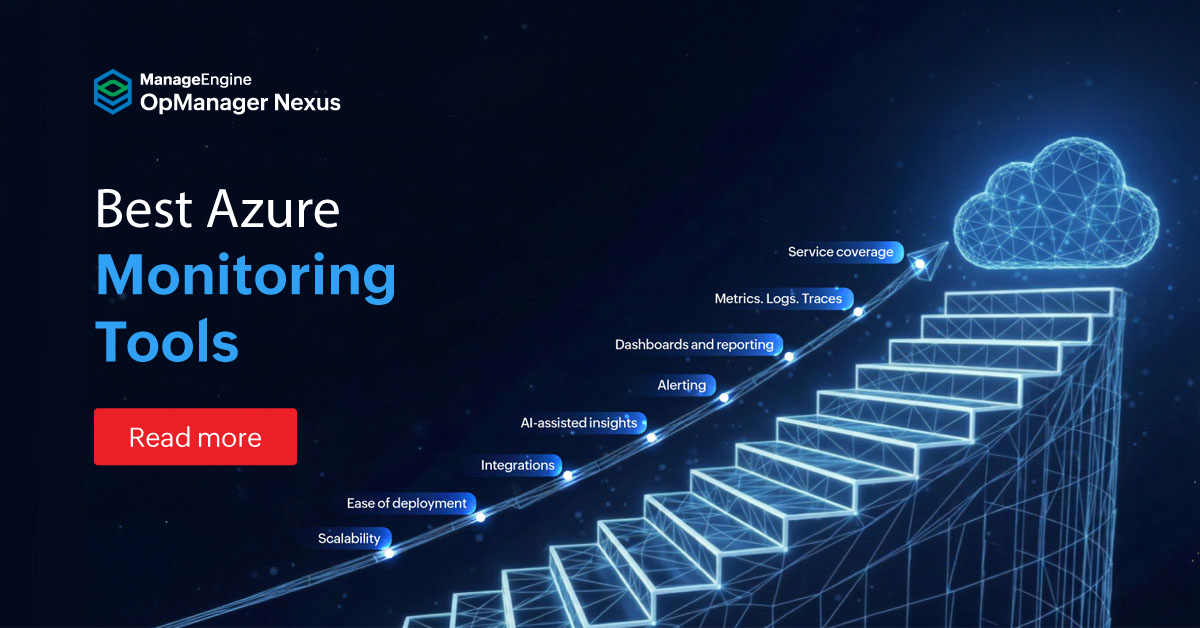
This article compares six leading Azure monitoring tools, evaluating them based on criteria such as service coverage, AI capabilities, and scalability to help IT teams manage compl…

The article argues that Huawei Cloud's native monitoring tools fail to detect complex network faults because they lack the ability to correlate data across different layers, such a…

This article explains how performance degradation in Alibaba Cloud often results from a cascading failure chain between ECS, RDS, and OSS rather than isolated service issues. It pr…

Effective monitoring of Alibaba Cloud requires a specialized approach that accounts for its unique scaling behaviors and cost-optimization strategies, which differ significantly fr…

Tencent Cloud's distributed systems maintain availability through self-adjusting mechanisms like traffic redistribution and retries, which can inadvertently create cascading intern…