Big-O Notation Made Simple
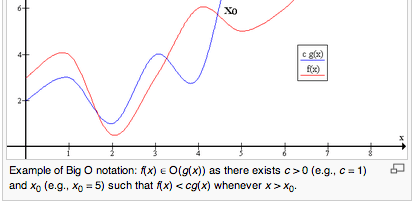
10/23/13 If you’re a programmer or computer scientist, you’re probably familiar with Big-O notation. It’s part of your foundational understanding of how complex a problem and/or al…
10/23/13 If you’re a programmer or computer scientist, you’re probably familiar with Big-O notation. It’s part of your foundational understanding of how complex a problem and/or al…

09/10/13 This post was featured in our July 2015 anthology of most popular SolarWinds Database Performance Monitor (DPM) blog posts of all time. One of the nice things about Go is …
08/27/13 At SolarWinds® Database Performance Monitor we have a specific need to daemonize one of our Go applications, which must safely run detached from terminals, with a working …
07/22/13 We found ourselves wishing for a tutorial to complement the database/sql documentation in Go, so we wrote one and shared it on Github. Please send pull requests to contrib…
06/25/13 At Velocity last week, I spoke about how we quantify abnormality in a system’s time-series metrics cheaply, in realtime, at high frequency. Note that this is not the same …
06/04/13 Not too long ago, my primary programming language was Perl. I’ve written a lot of Perl, including some things that I think are quite clever. And therein lies the problem. …
04/17/13 In previous posts, I claimed that thresholds are a root of much evil in monitoring systems (not the root of all evil, but a root of much evil), and that we’ve developed th…
04/10/13 Why is a threshold-based alert such a disaster? There are two big reasons. Thresholds are always wrong. They’re worse than a broken clock, which is at least right twice a …
04/09/13 In this post I’ll tell a story that will feel familiar to anyone who’s ever monitored MySQL. Here’s a recipe for a threshold-based alert that will go horribly wrong, beyon…
04/08/13 This post is part of an ongoing series on the best practices for effective and insightful database monitoring. Much of what’s covered in these posts is unintuitive, yet vi…